
Searching Vermillion County Civil Dockets
Start at Indiana MyCase. Got a case number? Use the Case tab. The Name tab works for people or businesses and adds filters for court, status, and filing date. Pick Vermillion Circuit Court so a common name doesn't drag in results from other counties, and note that MyCase is open to anyone for public cases.
A Vermillion Circuit number normally starts with 83C01. Check that prefix, the caption, party roles, filing date, and case type before you open the CCS. For help with name variants, wildcards, and number formats, the state search tips are worth a look.
- Choose Case or Name in MyCase.
- Enter the strongest identifier available.
- Set the court to Vermillion Circuit Court.
- Confirm the caption, roles, case code, and filing date.
- Read the CCS, then open any public document needed.
When the online result looks thin, go straight to the source. Call the Circuit Clerk at 765-492-5350, stop by 255 South Main Street in Newport, or mail a focused request to PO Box 10. The clerk's office can walk you through copy and certification steps.
Vermillion Civil Court of Record
Vermillion Circuit Court is the county's only court of record, and Local Rule 5 sends every case filed with the Vermillion County Clerk there. That single-court setup makes routing easy, unlike counties with several superior courts. The record layers still differ, though. MyCase shows public Odyssey data, the CCS lists events, and the Circuit Clerk holds the official file.
The Indiana Judicial Branch Vermillion page links them together. It connects the local court to statewide search, e-filing, and statistics tools.
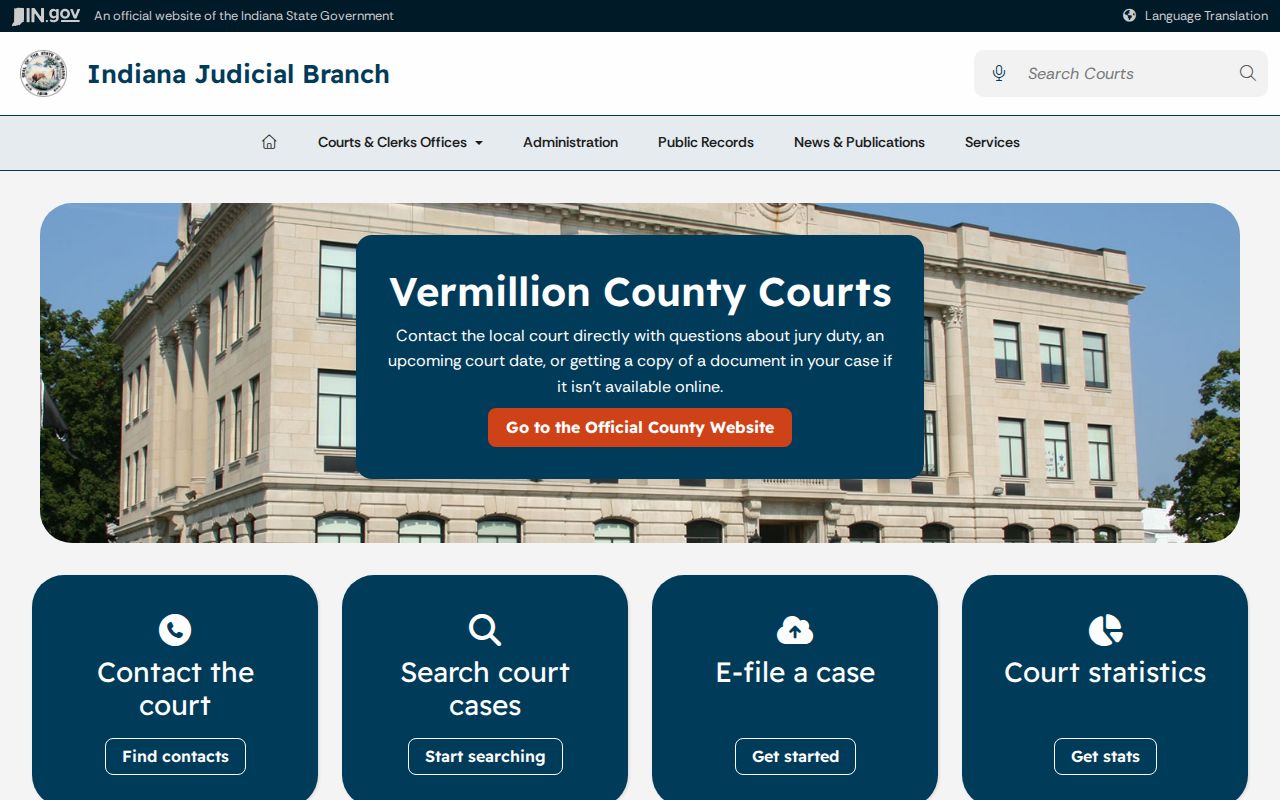
That state court page lays out the county court context you can use to narrow a civil docket search. One thing it makes plain: documents meant for a judge go through the Circuit Clerk, never through the public search screen. Filing and public viewing are two separate functions.
Inside a Vermillion County Civil Docket
A civil CCS is a log of steps, not a story with a verdict. Begin with the caption and party roles. From there, trace service, responses, and motions. Then follow settings, orders, judgment, and any satisfaction or post-judgment work that follows. One timing note: a filing date can differ from its CCS entry date.
| Case number | The 83C01-YYYYMM-TYPE-###### local identifier. |
|---|---|
| Parties | Plaintiff or petitioner and defendant or respondent roles. |
| Pleadings | Complaint, petition, answer, counterclaim, or other filed request. |
| Service | Notice and return events; read the wording before assuming completed service. |
| Settings | Conference, hearing, trial, or other scheduled court event. |
| Orders | Judicial action, sometimes summarized with a separate public image. |
| Judgment | Disposition and later satisfaction, modification, or enforcement events. |
The MyCase help page explains the portal's public and non-confidential scope.
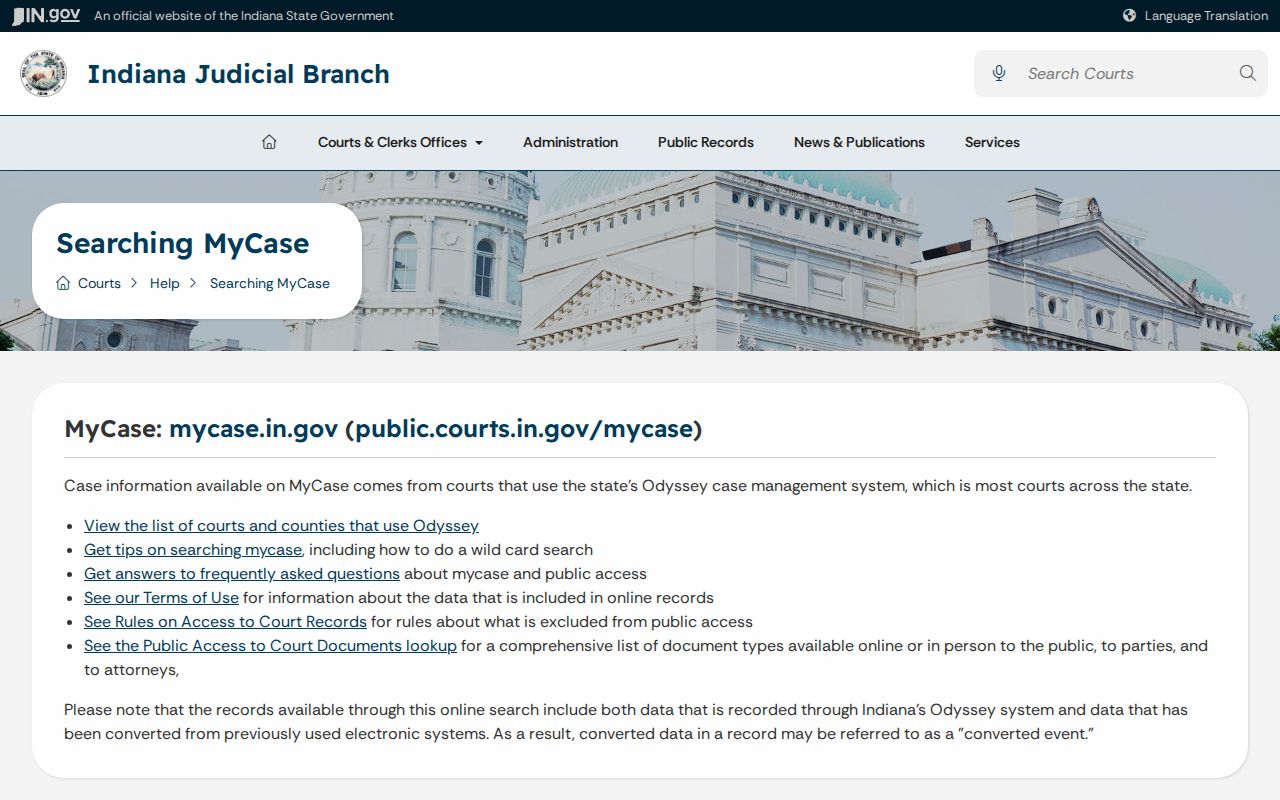
The help source is a useful reminder. The case summary on screen is not the official court record.
Vermillion Civil Codes Need Context
Indiana case codes sort cases into categories. They settle nothing about the merits. In Vermillion County civil docket results, expect codes for broad civil suits, debt, property, small claims, domestic relations, and protected proceedings.
- PL
- Plenary civil case.
- CC
- Collection case.
- CT
- Civil tort case.
- MF
- Mortgage foreclosure.
- SC
- Small claims.
- DC, DN, DR
- Domestic-relations categories that can contain restricted information.
Other codes cover mental health, adoption, protection orders, expungement, tax petitions, and tax sales. Some of those categories carry strong access limits. Treat no code or caption as proof of an allegation.
Civil Case Types on the Docket
Vermillion Circuit Court receives the county's public civil case-of-record categories, and each type leaves its own pattern in the CCS. Each pattern is distinct. A collection matter may lean on service, answer, judgment, and satisfaction. A tort or plenary action tends to carry more motions, conferences, and trial settings. Small claims run on simplified procedures. Family and protective matters can show public headers but restricted documents.
| Type | Common docket steps | Reading caution |
|---|---|---|
| Plenary or tort | Complaint, service, answer, motions, settings | A pleading states a claim, not a proved fact |
| Collection | Complaint, service, response, judgment, satisfaction | Check later payment or satisfaction entries |
| Small claims | Notice, service, hearing, judgment | Transfer can change the track |
| Domestic relations | Petition, notice, orders, settings | Some information is restricted |
A full statewide search process appears on the Vermillion County case lookup page.
Vermillion Civil Small Claims
Vermillion County small claims run under a published cap of $10,000. The county's 2024 manual covers claims and counterclaims. It also covers service, trials, and transfers, and it is linked from the Vermillion Circuit Clerk page, along with the forms. Fees are listed there too. Filing costs $97. Sheriff service runs $125, and each added defendant adds $10. One caution applies. That fee schedule dates from 2021, so confirm the amounts before you rely on them.
A small-claims docket entry tells its own story. The notice of claim, service, the hearing, and any judgment each appear in sequence. Filing alone starts the case; service and a response are separate acts. A default, a dismissal, or a judgment has to be read where it sits in that order. It is not proof of anything else.
Watch for a transfer as well. If the case moves to the plenary docket in Vermillion County court records, follow the new classification and its number. The old summary will not carry the whole story from that point on.
Civil Docket Settings and Hearings
A setting on the Vermillion County civil docket is a date on the calendar, not an outcome. It is not an outcome. The CCS may show a status conference, a motion hearing, a small-claims trial, or a bench trial. Start with the newest entries and read backward. Then scan the whole sequence. A continuance or cancellation can appear later.
Check the CCS against any summons, notice, or signed order you hold. Dates, times, or rooms sometimes disagree. When they do, call the Circuit Court at 765-492-5320 or the Clerk at 765-492-5350. A short portal label does not mean remote appearance is allowed. Ask the court directly about access, interpreters, rescheduling, or courtroom logistics.
The MyCase search form source lists the controls. They help you find the case before its settings can be checked.
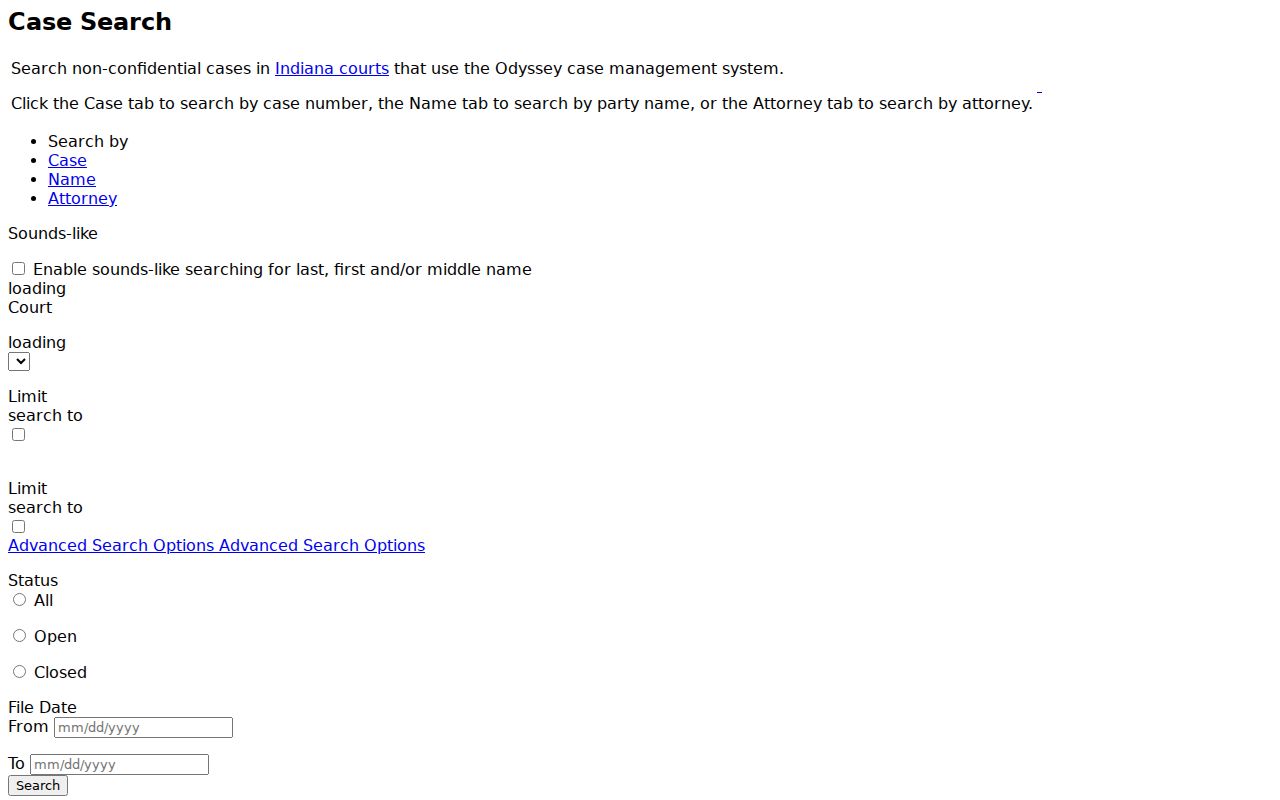
The court and date filters there can cut down false matches before a setting is read.
Vermillion Civil Documents May Differ
Seeing a case in the CCS does not guarantee you can download its papers. Statewide rules treat online access differently. In-person, party, and attorney access follow separate rules. Some older filings were never converted to electronic form. A blank link may also signal a record that is confidential or excluded by rule. The MyCase public-access document chart has the details. It spells out which case categories make documents viewable online.
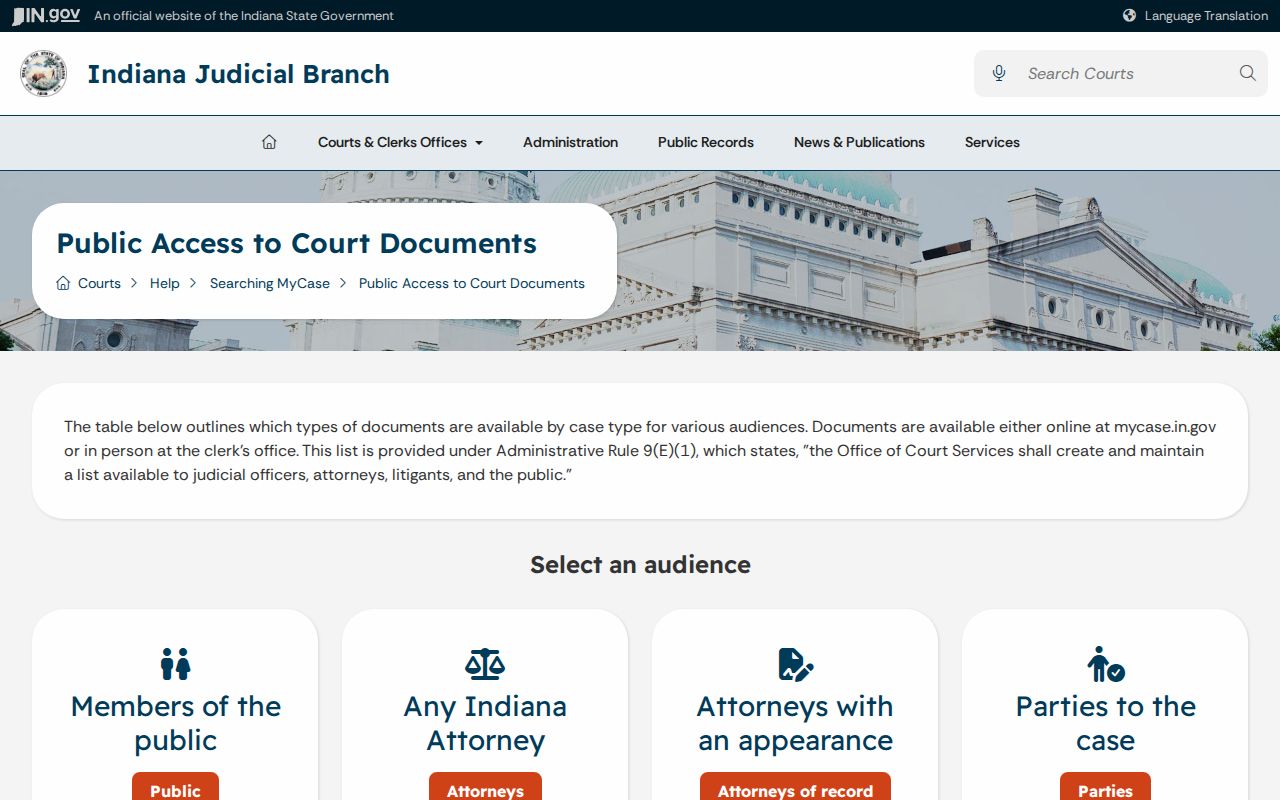
A CCS event line and a downloadable filing are two different things, and knowing the difference saves confusion. Parties can sometimes unlock more through an account paired with an access code. The MyCase party-access instructions walk through that route step by step.
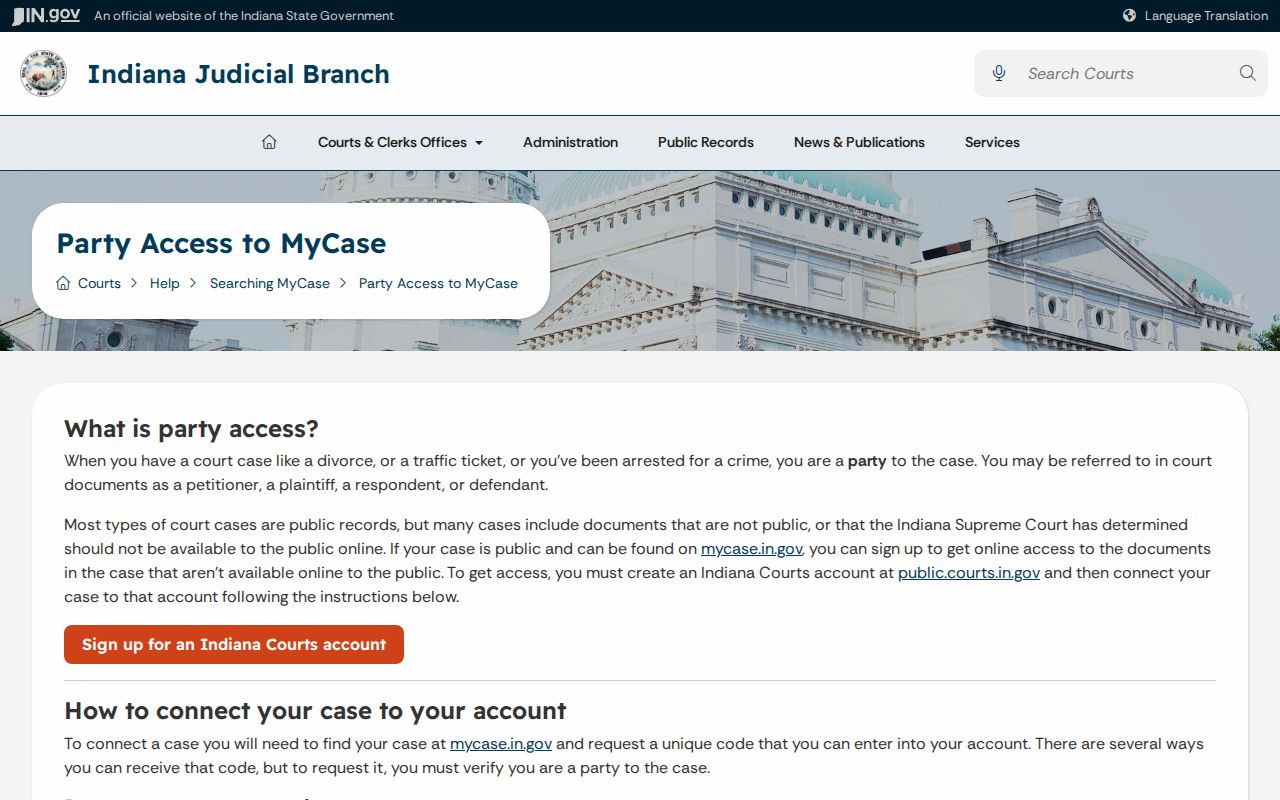
Even party access answers to record type and court rules. It never turns a restricted record into a public one.
Vermillion Civil Claims Need Proof
In a Vermillion County civil docket, a filing shows what one side asked for. A complaint, petition, counterclaim, or motion is a request. None of them is a ruling. What settles the question is an order granting or denying relief, a dismissal, a judgment after hearing, or a later satisfaction entry. Even a judgment can be modified or appealed.
This matters most when a case has a public caption but few documents online. Do not guess from the case code. When the exact wording of a ruling matters, request the official document from the clerk. Plain copies and certified copies serve different needs. The 2021 fee schedule lists $1 per page plus $3 for certification, and you should confirm current rates before ordering.
Vermillion Civil Filing Sequence
Read a CCS entry like a story with chapters. Begin with the complaint or petition. Then look for service or notice entries, and check whether an answer or counterclaim came next. Motions ask the court to act. Orders record what the judge actually directed. A hearing line only sets an event; it is not a result. A judgment records the outcome, but satisfaction, modification, enforcement, or appeal entries may change things later.
Dates matter at each step. Never assume service from the filing date alone. Never treat a motion title as proof the relief was granted. Check any judgment amount against later satisfaction entries and the official document itself. The CCS gives you the trail; the Vermillion Circuit Clerk holds the authoritative file and can issue certified copies.
Small claims sometimes transfer to another civil track. When that happens, note the old category and the new case information. Searching only one number can miss the rest of the matter.
Civil Docket Access Rules
Indiana's Rules on Access to Court Records govern which civil records the public can see. Rules 4 and 5 set out general access. They also cover the exclusions. Indiana Code 5-14-3 provides the wider public-record framework, but court rules control judicial records. Expect limits on protection-order, adoption, mental-health, sealed, confidential-identifier, and some family-case materials.
Public does not mean complete online access. Confirm an absent document with the clerk rather than assuming it never existed.
The 2026 access-rule amendments make the current rules, not an old summary, the right source.
The county's records request form asks you to describe exactly what you want, and it warns that copy fees may be due up front. Give the case number, the filing title, the date range, and whether you need plain or certified copies.